 M E L O R E M E D Y
 Initial Survey Results
Discover the research that went into creating MeloREMedy into the unique and effective tool for improving sleep quality that it is today.
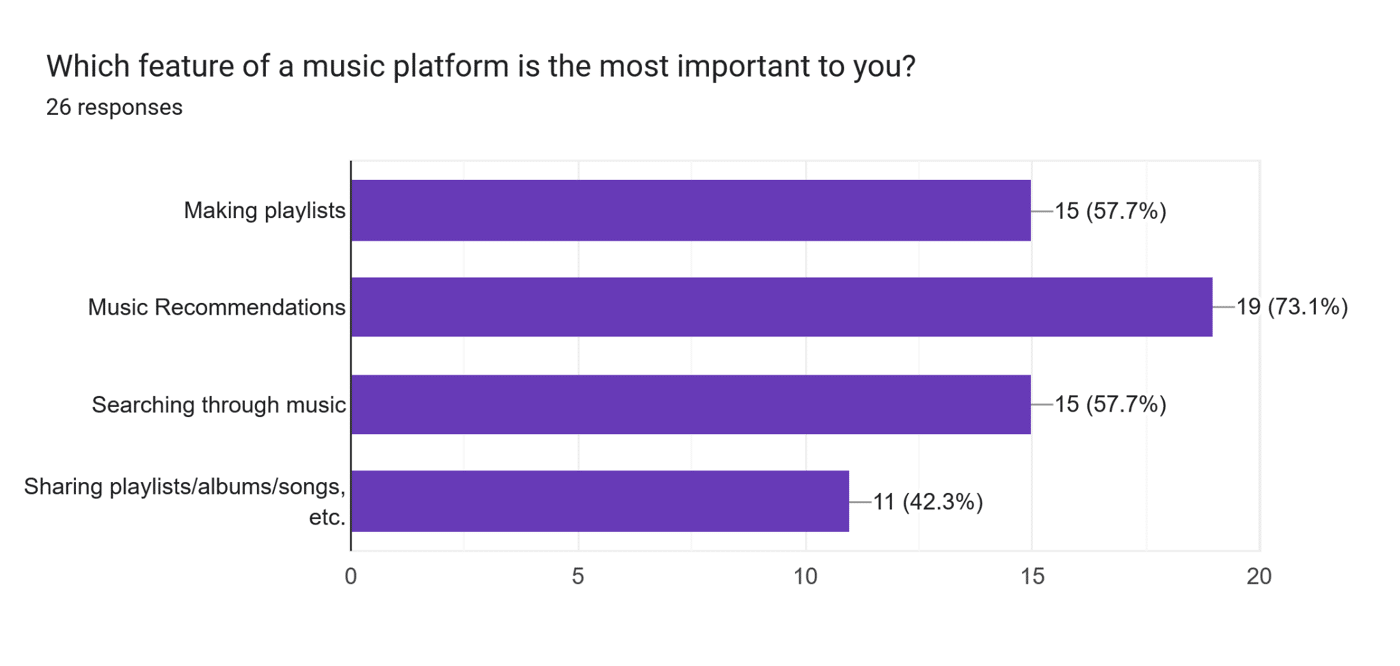
Important Features
Most users mentioned that the most important feature for them is getting good music recommendations, which is why we used AI.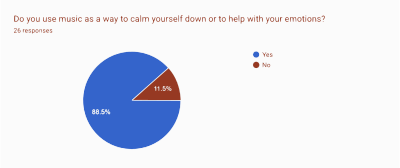
Calming Music
The majority of users also mentioned that they use music as a way to help regulate their emotions.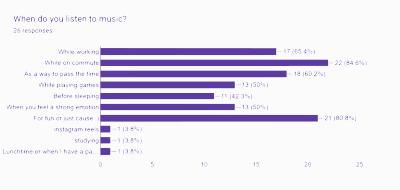
Listening Environments
When given multiple options, around 22 out of 26 respondents mentioned they listen to music while commuting or just for pleasure.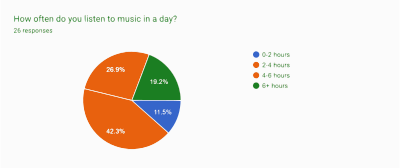
Listening Music
Our respondents tend to listen to music varyingly, however, nearly 40% of them listen to around 2-4 hours per day. 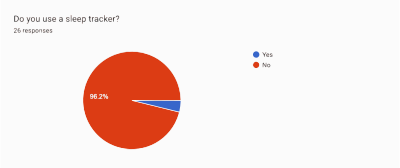
Sleep Tracker Usage
Out of 26 responders, only 1 person answered that they currently used a sleep tracker.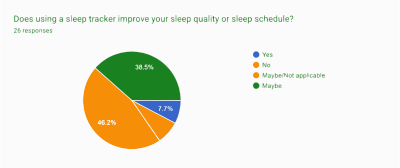
Sleep Tracker Improvement
The results on this didn't seem to favor the sleep tracker, as only 7.7% of users said a sleep tracker benefited them.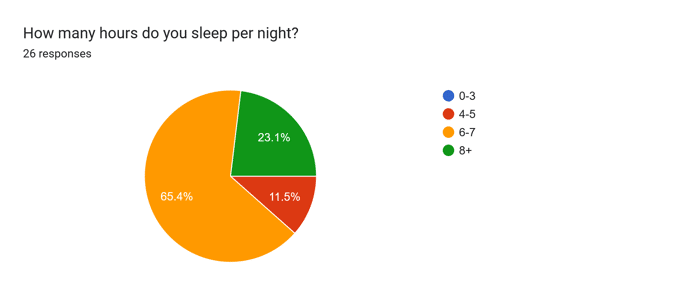
Sleeping Hours
Most respondents answered that they were getting around the recommend hours of sleep, 65.4% got 6-7 hours and 23.1% got 8 or more hours.Background Research
Read through some of the background research that inspired MeloREMedy to be what it is today.
Music as Medicine
This has been a long-standing, non-invasive, and inexpensive method for treating individuals with insomnia. Given that sleep is a critical part of everyday life, approximately 30 to 40 percent of adults in the United States struggle with some form of irregular sleep, and 8.4% consistently take sleep medications
Sleep Requirements
Within the pivotal years 18-25-year-olds experience, the typical emerging and exiting college student needs adequate sleep for productive brain functioning. Although busy schedules often interfere with prioritizing quality sleep, researchers have continuously shown that disruptive sleep routines can seriously affect school, work, and physical and mental health.
Reality of College Students
Many students get far less than recommended, with 70 to 96 percent of college students receiving less than eight hours of sleep per night and over 50 percent sleeping less than seven. Through the use of music as medicine, a personalized approach to enhance sleep quality can assist students across the nation.
Competitive Analysis
View the competitive analysis done on existing solutions in the market.
Spotify
The AI Playlist on Spotify generates a radio after analyzing your music preference/categorizes by genre/mood.
Nursing Study
A study conducted in the Wiley Online Library compared classical music, audiobooks, and no music on improving student sleep quality - they found that classical music showed positive results.
American Music Therapy Association
The AMTA is a nonprofit association who aims to bring awareness to the advantages of music therapy and help increase accessibility to high quality music therapy;
UCLA Health
They provide a variety of different music therapy treatments such as "neonatal intensive care unit (NICU) music therapy, neurologic music therapy and rehabilitative music therapy.”
Research Findings
From our survey, we found that majority of our responders (ages 18-25) receives 6-7 hours of sleep per night!
User Interview Preferences:
From our user interviews, we found that users would prefer gamification, a large music selection, music recommendations, and a clear visualization of data in our app.
Application Focus Areas:
We designed our app with a simple layout and game incentive to keep users intrigued, and displayed data in an understandable way.
External Inspiration:
We also took inspiration from other applications and their user interfaces such as Spotify for music playing, playlist creation and recommendations as well as Apple Health for data visualization.